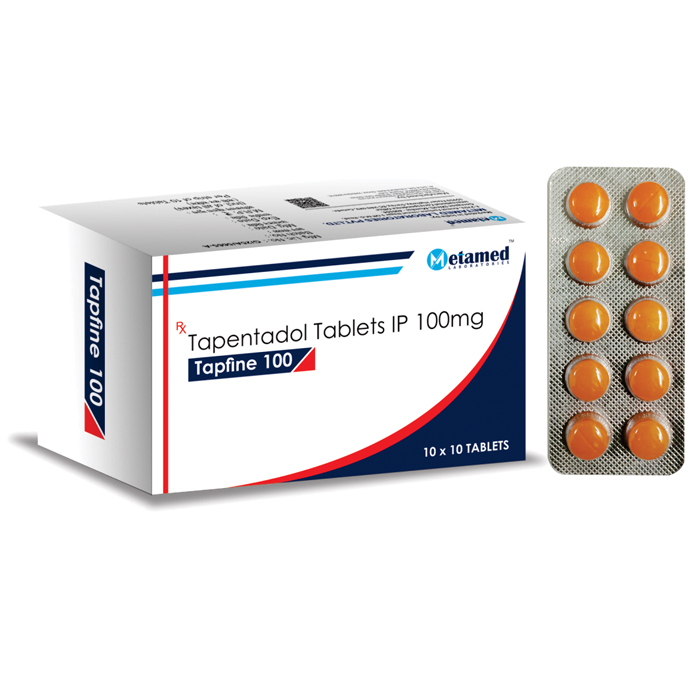
Tapentadol is a centrally-acting prescription medicine used to treat moderate to severe pain in adults. Classified as an opioid analgesic, it belongs to a generation of pain medications designed to combine effective analgesia with a more targeted mechanism than traditional opioids.
Tapentadol is a prohibited medication that can only be purchased with a prescription, just like other opioid medicines. It is not an over-the-counter medication, and using it requires supervision from a licensed healthcare provider who can determine whether it is suitable for your illness and keep an eye on you during the course of treatment.
Tapentadol was developed to address limitations seen with older opioids —particularly around tolerability and neuropathic pain management. Its dual mechanism of action distinguishes it from pure opioid agonists, a distinction that is covered in the next section.
Tapentadol is not suitable for everyone. Your prescriber will weigh your medical history, other medications, and pain type before recommending it. This guide explains the medicine; only your doctor or pharmacist can advise whether it is right for you.
What sets Tapentadol apart from many other opioid painkillers is its dual mechanism of action. Most opioids work primarily by binding to opioid receptors in the central nervous system — essentially dampening the brain’s perception of pain signals. Tapentadol does this too, but it also simultaneously inhibits the reuptake of noradrenaline (norepinephrine), a neurotransmitter involved in the body’s natural pain-modulating pathways.
Tapentadol produces significant analgesia with less opioid receptor activity than would be required from a strictly opioid-based strategy by combining mu-opioid receptor agonism and noradrenaline reuptake inhibition inside a single molecule. Although side effects are still a serious concern, this is believed to contribute to an improved gastrointestinal tolerability profile when compared to other older opioids.
Both actions take place in the central nervous system, where pain signals are processed and modulated. The noradrenaline reuptake inhibition component is particularly relevant for neuropathic pain, which does not always respond well to opioid receptor activity alone. This helps explain why Tapentadol can be effective in nerve pain conditions where other opioids show limited benefit.
Binds to opioid receptors in the brain and spinal cord, reducing the transmission and perception of pain signals through the central nervous system
Increases noradrenaline levels in the spinal cord, amplifying the body’s descending pain inhibition pathways — particularly useful for neuropathic and nerve pain.
Adults with moderate to severe pain may be treated with tapentadol when other analgesic medications are either ineffective or inappropriate. It can be recommended for both chronic pain (long-term, persistent diseases) and acute pain (short-term, like after surgery).
Acute Pain
Immediate-release Tapentadol is used for postoperative pain and other forms of acute pain where rapid and short-duration relief is needed. It is typically prescribed for a limited period following surgery or injury.
Prolonged-release formulations are used for chronic pain conditions that require around-the-clock management. These include persistent musculoskeletal pain, such as severe back pain, as well as cancer pain where other treatments are insufficient.
One of the more distinctive indications for Tapentadol is neuropathic pain — discomfort caused by nerve damage or dysfunction rather than tissue injury. In particular, Tapentadol prolonged-release is licensed for diabetic peripheral neuropathy in some countries. Managing nerve pain often requires treatment options that go beyond standard opioids, and Tapentadol’s noradrenaline reuptake inhibition contributes meaningfully in this area.
Whether Tapentadol is appropriate for your specific pain condition is a clinical decision. Approved indications vary by country. Always follow your prescriber’s guidance and do not use this medication for a purpose it has not been prescribed for.
Immediate-release (IR) and prolonged-release (PR) tablets are the two primary formulations of tapentadol that are produced; each is meant to be used in various pain treatment situations. Any patient’s pain type, severity, past opioid history, and overall clinical picture determine the right formulation and strength.
A balanced understanding of what Tapentadol can and cannot offer is essential for patients and caregivers considering or currently using it.
Effective relief for moderate to severe pain, including neuropathic pain that responds poorly to standard opioids. Clinically, it has demonstrated a comparatively favourable gastrointestinal tolerability profile versus some traditional opioids — with potentially fewer bowel-related side effects at equianalgesic doses.
Tapentadol is not a cure for pain and does not address underlying causes. Side effects — including nausea, dizziness, and constipation — are common. Like all opioids, it carries a real risk of dependence, tolerance, and addiction with longer-term use. It is not appropriate for everyone.
The dosage information below is general educational guidance drawn from prescribing information. Your actual dose must be determined by a licensed prescriber based on your individual circumstances. Never self-adjust your dose.
Tapentadol can have adverse effects, much like any medication, albeit not everyone has them. When commencing treatment or raising the dosage, side symptoms are more likely to occur, and many of them go away as the body adjusts. Knowing which symptoms are typical and which need to be treated right away is crucial.
You or someone near you shows signs of breathing difficulties, overdose, loss of consciousness, or a severe allergic reaction while taking Tapentadol. Call your emergency services immediately. Do not wait to see if symptoms resolve on their own.
Tapentadol is an opioid and carries a real risk of addiction, physical dependence, and tolerance — particularly with prolonged use, higher doses, or in people with a personal or family history of substance use disorder. Dependence means the body adapts to the presence of the drug; addiction involves compulsive use despite harmful consequences. These are distinct but related concerns. Follow your prescriber’s dosing instructions exactly and attend all follow-up appointments.
Stopping Tapentadol suddenly after regular use can cause withdrawal symptoms including restlessness, muscle aches, sweating, nausea, and insomnia. Tapentadol should always be discontinued gradually under medical supervision — your doctor will guide you through a tapering schedule.
Like all opioids, Tapentadol can depress the respiratory system — slowing or suppressing breathing. This risk is greatest when doses are too high, when the drug is combined with other central nervous system depressants, or in people with pre-existing lung conditions. Respiratory depression is the primary cause of opioid-related deaths.
Alcohol must not be consumed while taking Tapentadol. Combining alcohol with Tapentadol increases the risk of serious central nervous system depression, respiratory depression, and sedation, which can be life-threatening.
Tapentadol can impair reaction time, concentration, and the ability to drive safely. Do not drive, operate heavy machinery, or engage in activities requiring full mental alertness until you know how Tapentadol affects you. Impairment can be unpredictable and may be worsened by alcohol or other sedating medicines.
Tapentadol is a prescription-only restricted drug in the UK, meaning its supply and use are carefully regulated to reduce the danger of misuse, dependence, and illegal distribution.
Before providing Tapentadol, a licensed healthcare provider must assess your condition. For the treatment of moderate to severe pain, this guarantees that the drug is only used when necessary and that the advantages outweigh any possible hazards.
Although most pharmacies can distribute Tapentadol, it may not always be kept in stock because of the tight storage and dispensing regulations connected with controlled drugs. If it’s not available, you can check with a registered internet pharmacy or ask your neighborhood pharmacy to order it.
It is against the law to buy Tapentadol 100mg in UK without a valid prescription. These rules are intended to protect patients while guaranteeing that those with justifiable pain management needs can obtain the treatment responsibly and safely.